
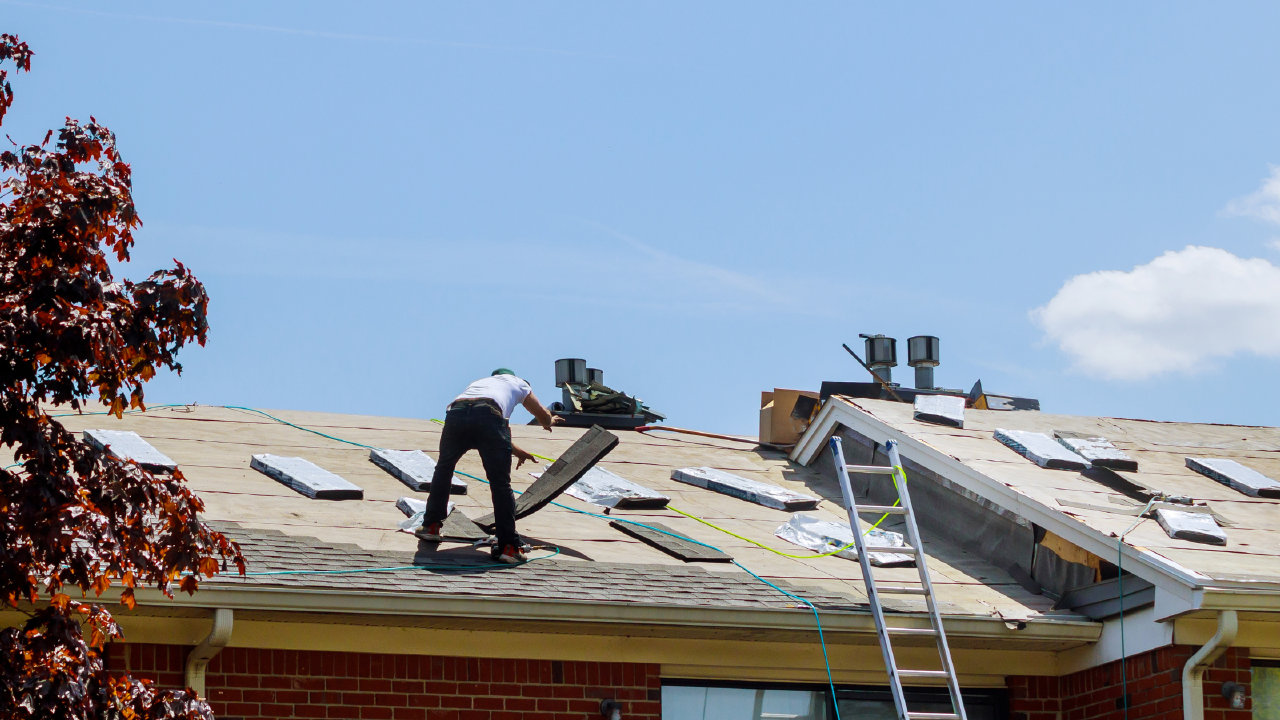
One of the most common disputes in Florida property insurance claims arises when a carrier agrees to pay for part of a roof, but refuses to replace the entire thing.
Homeowners often ask: can my insurance company replace only half my roof in Florida?
The answer depends on several factors, including your policy language, the type of shingles involved, and whether matching is reasonably possible. In many cases, the dispute is not just about square footage. It is about uniformity, appearance, and functionality.
Understanding how roof matching works in Florida can help you determine whether a partial replacement is appropriate or whether the carrier’s scope may be insufficient.
Partial roof replacement disputes are one of the more common issues we see in roof damage insurance claims.
Why Insurance Companies Propose Partial Roof Replacement
When storm damage affects only one slope or section of a roof, insurance companies often limit payment to that specific area. From the carrier’s perspective, if wind damaged one portion, only that portion requires repair.
This approach is based on the idea of “direct physical loss” to a particular area.
However, roofs are integrated systems. Shingles must interlock properly. Color and texture variations can be significant. Manufacturers frequently discontinue specific product lines. Even if a similar shingle exists, it may not reasonably match what is already installed.
When the proposed repair results in obvious mismatch or functional concerns, a partial replacement can become problematic.
What Is Roof Matching in Florida?
Florida regulations require insurers to make reasonable repairs or replacements that result in a reasonably uniform appearance. In practical terms, this means that if replacing one portion of the roof would create a significant mismatch, additional replacement may be necessary to achieve uniformity.
Matching issues commonly arise when the original shingles are discontinued, the color has faded over time, the style or profile is no longer available, or repairs would leave visible patchwork across slopes.
The key question becomes whether a reasonable match is available. If it is not, limiting repairs to one slope may not fully restore the property.
Is the Insurance Company Required to Replace the Entire Roof?
Not automatically. Every claim is fact-specific.
If matching shingles are readily available and the repair will result in a reasonably uniform appearance, a partial replacement may be appropriate. But if no reasonable match exists, the scope may need to expand.
The dispute often turns on evidence. Contractors, roofing experts, and manufacturer letters can be important in demonstrating whether matching materials are truly available.
Photographs comparing existing shingles to proposed replacements can also be critical.
If your contractor has indicated that matching is not possible, that opinion should be documented clearly and supported with detail.
Functional Concerns Beyond Appearance
Roof matching disputes are not always purely cosmetic. In some situations, tying new shingles into older materials can create functional issues, including compromised sealing or reduced lifespan.
If a repair approach affects the integrity of the roofing system, that may strengthen the argument for broader replacement.
Insurance companies may focus narrowly on visible storm damage, while homeowners and contractors focus on the roof as a complete system. Bridging that gap often requires technical explanation.
What Should You Do If the Carrier Refuses Full Replacement?
If your Florida insurance company is offering to replace only half your roof and your contractor believes that approach is inadequate, start by requesting a detailed explanation in writing.
Ask whether the insurer has confirmed the availability of matching shingles. Request documentation supporting its position. Ensure that your contractor’s opinion is provided in writing with photographs and, if possible, manufacturer correspondence.
If the dispute remains unresolved, you may consider having the matter reviewed by a Florida property insurance attorney. A legal review can help determine whether the proposed scope complies with policy requirements and applicable matching standards.
In some cases, additional documentation resolves the issue. In others, formal dispute resolution may be necessary.
Partial Replacement Is Not Always the Final Answer
Insurance companies often begin with the narrowest possible repair scope. That does not mean it is the only reasonable outcome.
If replacing only one slope of your roof would leave your home visibly mismatched or functionally compromised, the scope of repair may need to be reconsidered.
If you are facing a roof matching dispute in Florida and are unsure whether the carrier’s position is appropriate, you may request a consultation to review your claim and policy. An individualized evaluation can clarify whether partial replacement is sufficient or whether additional action may be warranted.